campione di ricamo
n. 4522
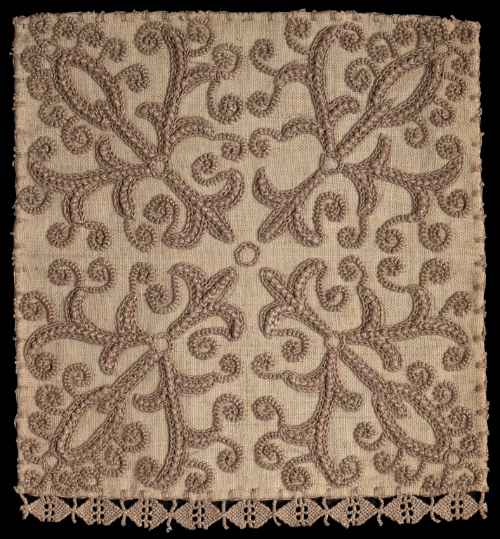
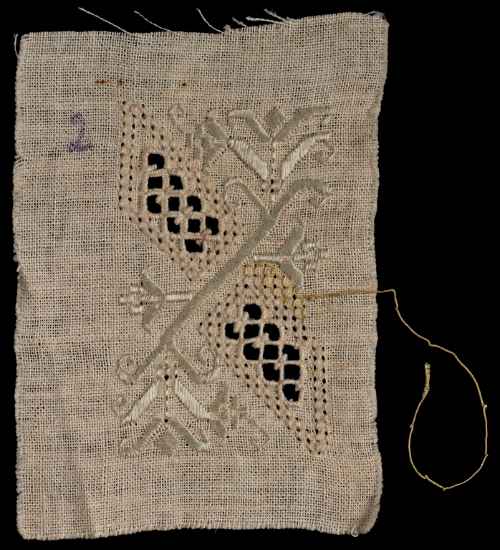
Frammento di tela di lino avorio ricamato a punti annodati e lanciati. Quattro elementi a tralcio fogliato concentrici negli angoli e uno a quattro petali al centro. L’elemento in basso a destra è completamente ricamato in cordonetto ecru ritorto a s, mentre gli altri si presentano allo stato di disegno preparatorio, con un accenno di ricamo in cotone avorio in basso a destra, in particolare la base a punti lanciati di un punto annodato.
Il telo presenta margini tagliati a vivo.
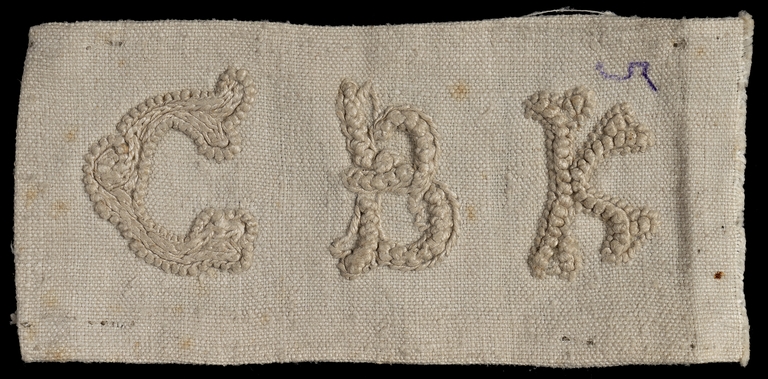
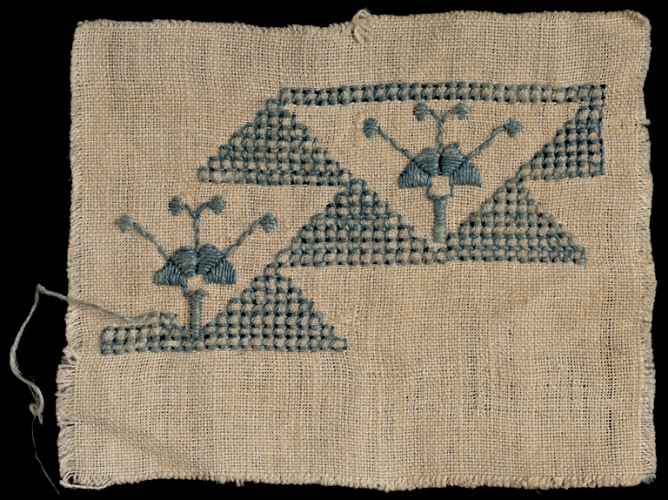
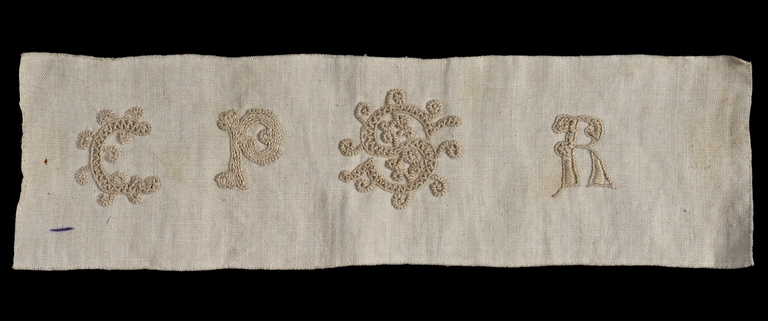
Il campione fa parte di un gruppo censito nel registro d'entrata del museo come "campionario" di 39 pezzi con un unico numero (2408) e comprende esempi della produzione della Scuola di ricamo Ranieri di Sorbello, alcuni riconducibili a pezzi documentati.
I motivi riprendono gli stilemi del “Punto di Sorbello”, tecnica messa a punto nella scuola di Romeine di Sorbello a Perugia nei primi anni del XX sec a partire da pezzi antichi, che prevede l’utilizzo congiunto di vari punti, prevalentemente annodati, e di alcune tecniche di rifinitura degli orli.
BibliographyRanieri R.
Romeyne Robert Ranieri di Sorbello imprenditrice americana e le origini della scuola di ricamo e di merletto
I talenti femminili alle origini dell'imprenditoria umbra
Perugia
2013
pp. 25-34
pp. 25-34
From food to music, from figure theatre to crafts, from archaeology to the rural world, from nature to science and technology in the museums of Emilia-Romagna
Together for a new culture of management and enjoyment of the heritage of the region's museums
The theatre buildings of Emilia-Romagna dedicated to live performance, understood as historic venues established by the 1930s
Museums, galleries, art collections, foundations, art parks, urban sites, exhibition venues and more dedicated to contemporary art in Emilia-Romagna
Museums, cultural institutions and collections in Emilia-Romagna where art, architecture, science and technology come together
Works of art in public buildings of Emilia-Romagna produced thanks to 2% of construction costs (law 717/1949 and subsequent amendments)
House museums, studios and archives of artists, filmmakers, collectors, families, writers, musicians, historical figures, scientists and inventors who lived in Emilia-Romagna between the nineteenth and twentieth centuries
The places of Emilia-Romagna that preserve the memory of the events that marked national and local history during the twentieth century
An overview of the rich textile heritage held in the museums and other cultural places of Emilia-Romagna
The heritage of Emilia-Romagna in the art collections of municipalities, provinces and local health authorities, in church and cemetery complexes, in spa buildings and in other places of cultural interest
Fortresses and castles, witnesses of time and a founding element of the historic landscape of Emilia-Romagna.
The meeting of nature, architecture and landscape in public green areas, botanical gardens and the grounds of hospital complexes, spa centres, monumental cemeteries, villas and castles of Emilia-Romagna
Single trees, groups of trees or tree rows of remarkable scientific or monumental value protected by the Regione Emilia-Romagna
Cultural and natural sites recognised as world heritage, and living traditions: from monuments to landscapes, from intangible cultural knowledge to creative activities, Emilia-Romagna offers an extraordinary variety of cultural testimonies that speak to the world
Urban layouts, monumental complexes, rural settlements and archaeological areas bearing witness to the civilisations and events of antiquity in Emilia-Romagna
The distribution of these places testifies to the long history of the Jewish presence in Emilia-Romagna
Over a thousand architectural works of merit built in Emilia-Romagna in the second half of the twentieth century
A centuries-old tradition in the field of therapeutic waters has made Emilia-Romagna a region dotted with spa establishments
The architectural, productive and social history of over a hundred disused or abandoned industrial sites and plants in Emilia-Romagna
The industrial culture of ceramics and its historical know-how through a mapping of the production centres in Emilia-Romagna
Cemetery sites of Emilia-Romagna distinguished by buildings and monuments of significant artistic and cultural value, by their role as symbolic places of collective memory and by activities designed to promote them
Historic productive buildings powered by watercourses, still existing, working or disused, witnesses of a material culture widespread in the landscapes of the valleys and plains of Emilia-Romagna